The SG-1000, which stands for Sega Game 1000, was a cartridge-based video game console manufactured by Sega. This system marked Sega's first entry into the home video game hardware business, and while the system was not popular, it provided the basis for it's more successful successor Sega Master System.
The SG-1000 is one of Taiwan's first and best-remembered consoles where it was manufactured and sold under license as "阿羅士" ['Lou Shi'].
Sega released an updated version (july 1984) with a re-styled shell and the connector for the optional plug-in SK-1100 keyboard has been moved from the rear to the front.
In Japan the console also had an optional game card reader add-on "Card Catcher" that allowed for the use of Sega game card software. Card based software was exclusive to Japan, only cartridge based games were released in Europe and Oceania. The card reader became built into the Sega Mark III, as well as the first version of the Sega Master System.
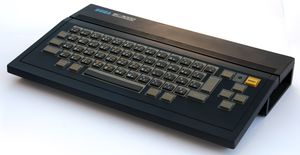
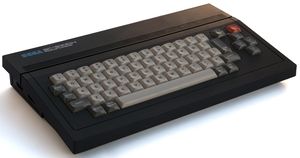
SC-3000The SC-3000 (1983) was the computer equivalent of the SG-1000 and was marketed as a computer for begginers. Since games were compatible with both the SC-3000 and SG-1000, and since the SC-3000 was also able to run computer applications, it outsold the SG-1000.
Users were able to create their own programs and games on the machine in BASIC, as well as machine code. A speech synthesis unit, light pen, and several other third party accessories were also available.
SC-3000HThe SC-3000 had an add-on called the SF-7000. The SF-7000 added 64KB of RAM and 8KB ROM, a 3-inch floppy disk drive, a parallel port, and an RS-232 serial port.
An upgraded version (SC-3000H) was released with more RAM and an upgraded keyboard (the original keyboard was of the low-end membrane type).
The Sega Mark III (model number SG-1000M3), was a newer version released only in Japan with improved video hardware and an increased amount of RAM, which was redesigned to become the Sega Master System.